Status

When it comes to work, a reliable headset isn’t just a convenience—it’s a necessity. Whether you’re attending virtual meetings, taking calls, or multitasking between devices, the right headset can enhance productivity and make your workday more efficient. But with so many options on the market, how do you choose the perfect one?
This guide will walk you through everything you need to know before buying your first business headset.
1. Understand Your Primary Needs
Start by identifying how you’ll use the headset. Are you making frequent calls? Joining back-to-back online meetings? Do you need to move around during calls or work at a desk all day? Your needs will help prioritize features like comfort, connectivity, or sound quality.
2. Wired vs. Wireless: Which Fits Your Workflow?
Wired Headsets:
- Offer reliable, consistent audio quality.
- No battery life concerns.
- Ideal for stationary setups where mobility isn’t needed.
Wireless Headsets:
- Provide freedom to move during calls or meetings.
- Require charging but often include long battery life.
- Perfect for multitasking and staying connected away from your desk.
Pro Tip: If you’re choosing a wireless headset, look for models with at least 8+ hours of battery life to cover a full workday.
3. Comfort Is Key
You’ll likely wear your headset for hours, so comfort is crucial. Consider:
- Over-Ear Headsets: Cushioned earcups that surround your ears, providing long-term comfort and noise isolation.
- On-Ear Headsets: Rest on your ears, lightweight but with less noise isolation.
- In-Ear Headsets: Compact and portable, ideal for short-term use or frequent travel.
Adjustable headbands, padded ear cushions, and lightweight designs can make extended wear much more enjoyable.
4. Mono vs. Stereo: Which Style Suits You?
- Mono Headsets (One Earcup): Keep one ear open to stay aware of your surroundings, great for multitasking.
- Stereo Headsets (Two Earcups): Deliver focused, immersive audio for distraction-free calls and meetings.
Mono headsets are ideal if you need to engage with colleagues or monitor your environment, while stereo headsets are better for concentration.
5. Key Features for Business Professionals
For seamless work performance, prioritize these must-have features:
- EHS (Electronic Hook Switch): Lets you answer calls when you’re away from your desk.
- Mute/Volume Controls: Ensure quick, intuitive adjustments directly from the headset.
- Multi-Device Compatibility: Connect effortlessly to both your desk phone and computer for meetings on platforms like Zoom, Microsoft Teams, or Google Meet. Some headsets even auto-switch between devices for added convenience.
6. Sound Quality: Be Heard Clearly
High-quality audio ensures clear communication. Look for:
- Audio Clarity: Opt for headsets with HD or wideband audio for rich, natural sound.
- Microphone Quality: Noise-canceling mics filter out background noise so your voice comes through clearly.
If you frequently host or join virtual meetings, a great microphone is essential for professionalism and clarity.
7. Noise Cancellation: Stay Focused
Working in a noisy environment? Noise-canceling technology can make a big difference.
- Active Noise Cancellation (ANC): Blocks external noise so you can focus on calls and meetings.
- Passive Noise Isolation: Achieved through snug-fitting earcups that naturally reduce ambient sound.
Pro Tip: If your office has frequent distractions, ANC headsets can be a game-changer.
8. Durability for Everyday Use
A good business headset should withstand regular wear and tear. Look for:
- Sturdy materials, like reinforced headbands.
- Replaceable ear cushions for longevity.
- Water or sweat resistance if you’re often on the move.
9. Battery Life: Power Through Your Day
For wireless models, battery life is critical. Many headsets offer quick-charging features, allowing a few hours of use with just 10–15 minutes of charging. Ensure the headset can handle your daily workload without frequent interruptions.
10. Warranty: Protect Your Investment
When purchasing a headset, the warranty is an important factor to consider. Most headsets have a standard 1-year warranty, covering defects and basic issues. However, premium brands like Leitner stand out by offering an impressive 5-year warranty, ensuring peace of mind for long-term use.
Pro Tip: Always review the warranty details to understand what’s covered, such as wear-and-tear versus manufacturing defects.
11. Support: Partner with a Trusted Vendor
Even the best headsets may require troubleshooting or setup assistance. Whether it’s configuring your headset with multiple devices, updating firmware, or addressing unexpected issues, having access to quality support is invaluable.
Look for vendors who provide responsive, knowledgeable customer service. A trusted partner can help your team resolve problems quickly, minimizing downtime and ensuring smooth operation. Some vendors even offer ongoing training or proactive support to help you get the most out of your headset.
12. Bonus Features for Business Efficiency
- Voice Assistant Integration: Use Siri, Alexa, or Google Assistant to manage calls and reminders hands-free.
- Touch Controls: Adjust volume, mute, or switch calls with simple gestures on the headset.
These advanced features can streamline your workflow and enhance productivity.
Top Tips Before You Buy
- Test for Fit and Feel: If possible, try on the headset to ensure it’s comfortable for extended wear.
- Read Reviews: Learn from other professionals’ experiences to avoid potential issues.
- Set a Budget: Headsets range widely in price. Decide what features you need most and choose accordingly.

Final Thoughts
Your first business headset is more than a tool—it’s an investment in your productivity. By focusing on comfort, sound quality, and compatibility, you’ll find a headset that makes every call and meeting a breeze.
Take the time to choose wisely, and you’ll enjoy a more efficient and professional work experience.
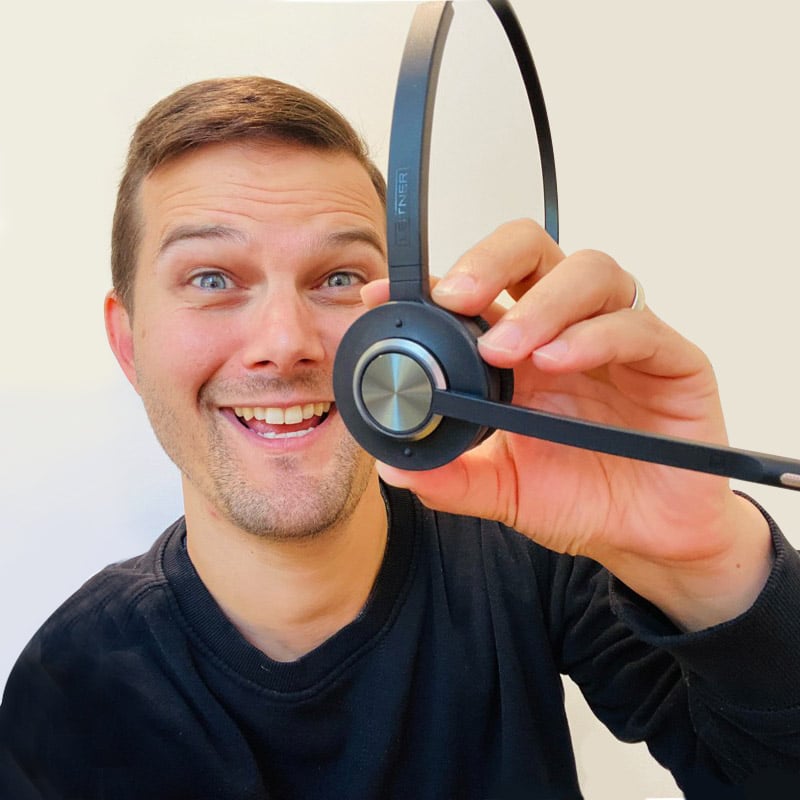
The Author:
Kevin Peña is the Strategic Partnership Manager at Headsets.com. Kevin has been with Headsets.com for almost 16 years, and his enthusiasm for headsets continues to grow.